
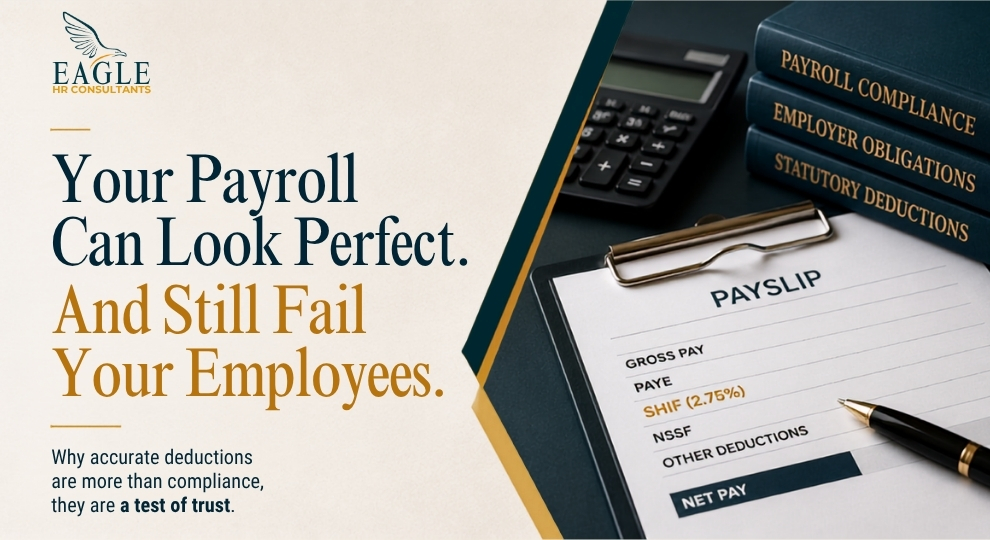
A payroll run can be completed successfully and still be wrong: Salaries may reach employees on time, payslips may be issued, bank files may process without interruption. From an operational perspective, everything may appear normal. The more important question is whether every statutory deduction was calculated correctly, remitted on time and credited to the correct employee. This has become particularly important under Kenya’s Social Health Authority framework.
For employers, SHIF payroll compliance is not simply a matter of inserting a 2.75% deduction into payroll software. It requires accurate employee data, correct calculation logic, timely remittance, proper reconciliation and evidence that the entire process worked as intended.
Understanding SHA and SHIF:
The Social Health Authority, known as SHA, is the institution responsible for administering Kenya’s social health insurance framework. The Social Health Insurance Fund, known as SHIF, is one of the funds administered by the Authority. For employees in salaried employment, the contribution is calculated at 2.75% of gross salary or wages, subject to a minimum monthly contribution of KSh 300. Employers are required to deduct the contribution and submit it to SHA by the ninth day of each month. They must also report changes in employee status and notify the authority within 30 days when employment ends. These obligations make SHIF compliance an ongoing employer responsibility rather than a one-time payroll configuration exercise.
Why a completed payroll run may still be non-compliant:
1. Payroll software processes the instructions it has been given.
2. It does not independently determine whether those instructions are legally correct.
3. An organization may therefore have a reliable payroll system that is operating with an incorrect formula, outdated employee information or incomplete remittance controls.
Potential weaknesses include:
- Incorrect treatment of gross salary
- Legacy deduction formulas retained from earlier payroll configurations
- Manual adjustments that are not independently reviewed
- Employee details that do not match SHA records
- Payroll deductions that do not reconcile with remittance totals
- Failed or incomplete portal submissions
- Employment changes that have not been updated
None of these problems necessarily prevents salaries from being paid. That is what makes them dangerous. The payroll process may appear successful while the statutory obligation remains incomplete.
Why SHIF errors affect employee trust:
Employees do not experience payroll as an accounting system; they experience it as a promise. They expect the organization to pay the correct salary, deduct the correct statutory amounts, and ensure that those deductions reach the intended institution. Under the Social Health Insurance Act, access to services is linked to a contributor’s status being up to date and active. A deduction that appears on a payslip but is not correctly reflected in the contribution record can therefore create a serious concern for the employee.
The employee may reasonably ask the following:
- Was the deduction calculated correctly?
- Was it remitted?
- Was it submitted against my correct identification details?
- Are my other statutory deductions also accurate?
A single payroll discrepancy can therefore weaken confidence in the broader employment relationship.
A payslip is not sufficient evidence of compliance; it shows what the employer intended to deduct. It does not mean that the deduction was remitted accurately and successfully.
A complete payroll compliance record should connect four pieces of evidence:
1. The employee’s payroll record
2. The statutory calculation
3. The amount deducted on the payslip
4. The amount successfully submitted and credited through SHA
These records should reconcile and where they do not, the organization should investigate the difference before the next payroll cycle.
What a SHIF payroll audit should examine:
A structured SHIF payroll audit should go beyond checking whether a deduction exists.
1. Calculation accuracy: Confirm that the 2.75% contribution is being applied to the correct gross salary or wage and that the statutory minimum is recognised.
2. Employee information: Check that identification details, employment status and other relevant employee information match the records used by SHA.
3. Payroll reconciliation: Compare the total deducted from employees with the amount submitted through the employer portal.
Every difference should be explained.
4. Remittance deadlines: Confirm that contributions were submitted by the ninth day of each month and that evidence of successful submission has been retained.
Late payment can attract penalties under the Social Health Insurance Act.
5. Employment-status updates: Ensure that new employees, departing employees and other changes in employment status are reported correctly.
6. Internal controls: Review who prepares payroll, who checks it, who authorizes payment and who confirms successful remittance.
The same person should not control every stage without independent review.
The questions leadership should ask:
Senior leaders do not need to become payroll technicians; however, they do need confidence that the organization's payroll systems can withstand scrutiny.
Management should be able to answer the following:
- When was the SHIF payroll configuration last independently reviewed?
- Who verifies statutory changes before they are applied?
- Do payroll deductions reconcile with SHA remittances every month?
- How are failed submissions or unmatched employee records identified?
- Can the organization produce evidence of compliance for each payroll period?
Where the answers are unclear, the organization has a control weakness even if no employee has yet complained.
Frequently asked questions:
1. How is SHIF calculated for salaried employees in Kenya?
The contribution is generally calculated at 2.75% of gross salary or wages, subject to a minimum contribution of KSh 300 per month.
2. When should employers remit SHIF contributions?
Employers are required to deduct and submit salaried employee contributions by the ninth day of each month.
3. Does a deduction on the payslip prove compliance?
No. The payslip proves that the deduction was recorded in payroll. Employers should also verify that the amount was successfully remitted, reconciled and credited against the correct employee records.
4. How often should payroll compliance be reviewed?
Payroll controls should be reviewed after significant statutory changes, system changes, changes in payroll providers and whenever discrepancies arise. A periodic independent review also helps identify silent errors before they affect employees.
Employees simply receive the correct salary and retain confidence that the organization has fulfilled its obligations. Whereas a poor payroll is different, it attracts questions from employees, management, auditors and regulators. It consumes time, weakens trust and exposes gaps in organizational governance. For this reason, payroll should not be judged only by whether salaries were paid.
It should be judged by whether every statutory obligation behind those salaries was fulfilled accurately, consistently and transparently.
How Eagle HR Consultants can help:
Eagle HR Consultants supports organisations across Kenya and East Africa with payroll compliance reviews, HR audits, statutory deduction verification, HR outsourcing, employment documentation and the design of effective HR governance systems. Where your payroll system has not been independently reviewed since the transition to SHIF, a compliance review can help confirm that employee records, statutory calculations, remittances and reporting processes remain properly aligned.
A payroll error is easiest to correct before it becomes an employee experience.
(This article provides general human resource and employment compliance information. It does not constitute legal, tax or financial advice for a specific organisation.)